Five conclusions for Europe ahead of the October European Council
Beijing has turned down the heat just enough to keep Europe in the pot. But the frog is still boiling. Unless the European Council uses this reprieve to set a timetable for rebalancing and corrective action, this will be a tactical win for Beijing.
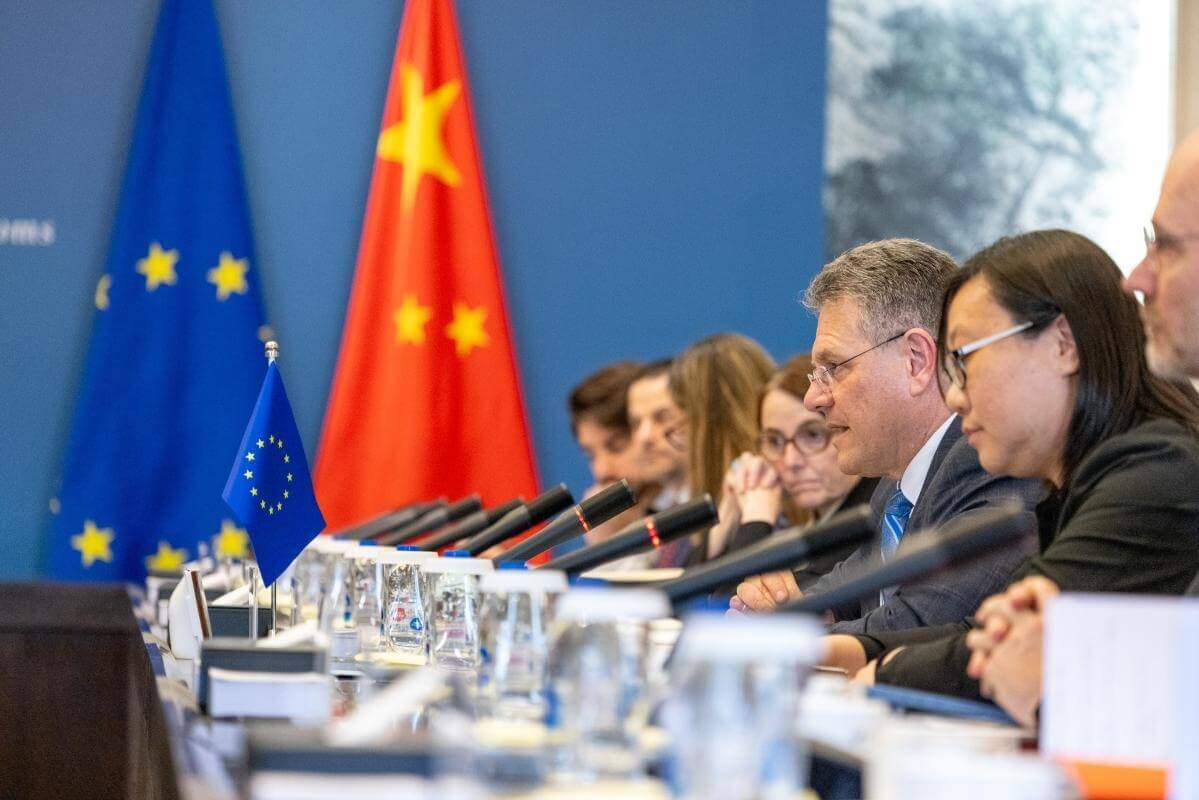
Maroš Šefčovič’s public account of the Beijing talks identifies three shared understandings: moderating hybrid exports, lowering tariffs on almost €4 billion of European goods and facilitating rare-earth licensing. Until member states receive the full debrief, caution is warranted. The baseline, legal form, enforceability and permanence remain unclear. What is more, Beijing’s approach was predictable: reject significant concessions, then offer enough to preserve the process. Nothing announced so far changes the fundamental imbalance.
That makes the European Council on 15 and 16 October a real test. Any hint of satisfaction, or a request that the Commission merely ‘explore further talks and options’, would signal delay and weakness to Beijing. Leaders should set clearer red lines, a timetable and milestones for increasing EU rebalancing measures and corrective action. They should mandate full use of existing instruments and request legislation for a systemic response instrument, with the Commission in the lead and automatic triggers, to overcome Europe’s collective action challenges.
Against that backdrop, here are five thoughts on what Europe should take from the Beijing talks:
1. This is a reprieve, not proof of rebalancing
It is too early to call the outcome a proof of concept. An unpublished understanding on one vehicle category cannot answer an EU goods deficit with China of about €360 billion in 2025, close to €1 billion every calendar day. The hybrid understanding may halve projected exports, but volumes could still rise from today’s level. The tariff changes promise about €225 million in savings. The rare-earth ‘green channel’ does not remove Europe’s strategic vulnerability. As Gunnar Wiegand argued before the visit, Europe needs a deal, but not just any deal. Progress means overall rebalancing: predictable critical-mineral supplies, verifiable restraint across all exposed sectors and additional market access. The understandings are a starting point for negotiation, not a reason to suspend European action.
2. Europe faces a systemic challenge not an automotive dispute
The core problem is China’s combination of industrial overcapacity, state finance, weak domestic consumption, renminbi undervaluation and the deliberate construction of control over upstream value chains. Recent analysis by Jürgen Matthes and colleagues at IW estimates that the renminbi is undervalued by 20 to 30 per cent. Or, using industrial producer-price indices adjusted for exchange-rate movements, IW estimates that the euro area’s relative cost position against China deteriorated by more than 40 per cent between January 2020 and January 2026. As we’ve argued, this is much more than a competitive challenge. It is a major economic, technological, social, political and security challenge for Europe. Europe is being asked to absorb Chinese industrial adjustment through lost production and jobs, while accumulating dependencies Beijing has shown itself willing to weaponise. An automotive settlement cannot imply tolerance of distortions in batteries, robotics, wind equipment, machinery, chemicals or biotechnology. Nor can it become a sleeping pill while a fast-moving train bears down on Europe.
3. Europe has more leverage than it thinks
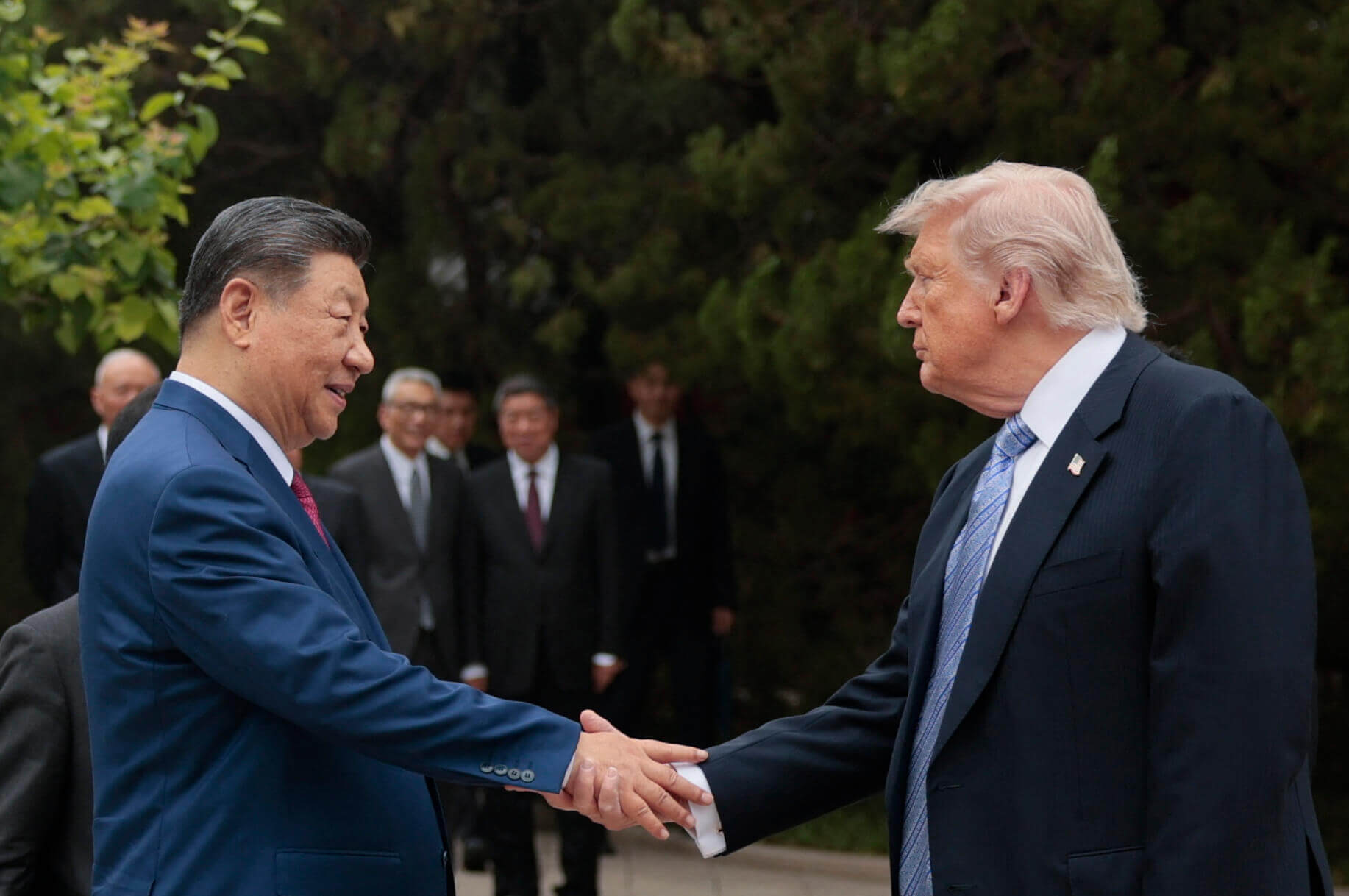
At the same time, Europeans must understand that China may look formidable, but it is not omnipotent. Weak domestic consumption and a more restrictive US market make access to the EU single market indispensable to Beijing. The notion of a ‘Fragile China’, popularised by Tim Rühlig and others, matters: Beijing’s vulnerabilities make it more assertive, but they also give Europe significant bargaining power. The lesson from the Trump-Xi summit is that interdependence becomes leverage only when the other side believes it will be used. Europe cannot remain the adjustment variable in bargains struck elsewhere. That is the logic of a doctrine of reactive assertiveness, which must now guide Europe: set red lines and remain open to negotiation, but ensure that persistent distortion and coercion trigger proportionate consequences.
4. Europe must use today’s instruments while building tomorrow’s
The Franco-German non-paper can be a breakthrough. It supports both the full use of existing tools and the preparation of a systemic instrument covering whole sectors, subsidies and currency manipulation, with access to the single market restricted unless a qualified majority blocks Commission action. This recognises that Europe’s collective action problem requires stronger Commission powers. The trigger must cover the severe and persistent distortion itself, not only efforts to obstruct an EU response.
Nothing should wait for new legislation. The European Parliament’s 454-to-86 vote for reciprocity, de-risking and proportionate countermeasures provides a broad mandate for action. Leaders should instruct the Commission to use safeguards, ex officio trade defence cases, the Foreign Subsidies Regulation and the International Procurement Instrument more systematically, and the Anti-Coercion Instrument whenever its legal test is met. Yet implementation also requires staff, a point von der Leyen must take seriously. The relevant DG Trade teams in Directorates F and G are estimated to be roughly UK-sized and only one-quarter to one-fifth of comparable US capacity. Those numbers are no basis for navigating a far tougher geopolitical environment.
5. Unity must be organised before Beijing tests it
Finally, make no mistake: Beijing can read Europe’s political calendar. Germany is under strain, France is approaching a portentous presidential election, and Ukraine, energy, debt and the next EU budget compete for leaders’ attention. China’s new anti-dumping investigation into an EU chemical product cannot yet be labelled retaliation but sends a clear signal. Europe needs advance solidarity arrangements and support for sectors or member states hit by coercion.
This unity will not organise itself. The Commission must now lead from the front. France knows what it wants, Germany is moving towards a firmer position, Spain knows what it opposes. The Commission cannot wait for 27 national positions to converge before defining the European interest and building a coalition behind it. Most European capitals are looking to Brussels for direction.
Collective action is also needed abroad. The Franco-German paper calls for closer cooperation with like-minded countries. The EPC’s work on an Economic Security Alliance would give this commitment practical form. It could begin with the EU-Canada partnership and expand plurilaterally to Japan, the United Kingdom, South Korea and others, coordinating monitoring, diversification, crisis support and responses to coercion.
Beijing has turned down the heat just enough to keep Europe in the pot. But the frog is still boiling. Unless the European Council uses this reprieve to set a timetable for rebalancing and corrective action, this will be a tactical win for Beijing.